



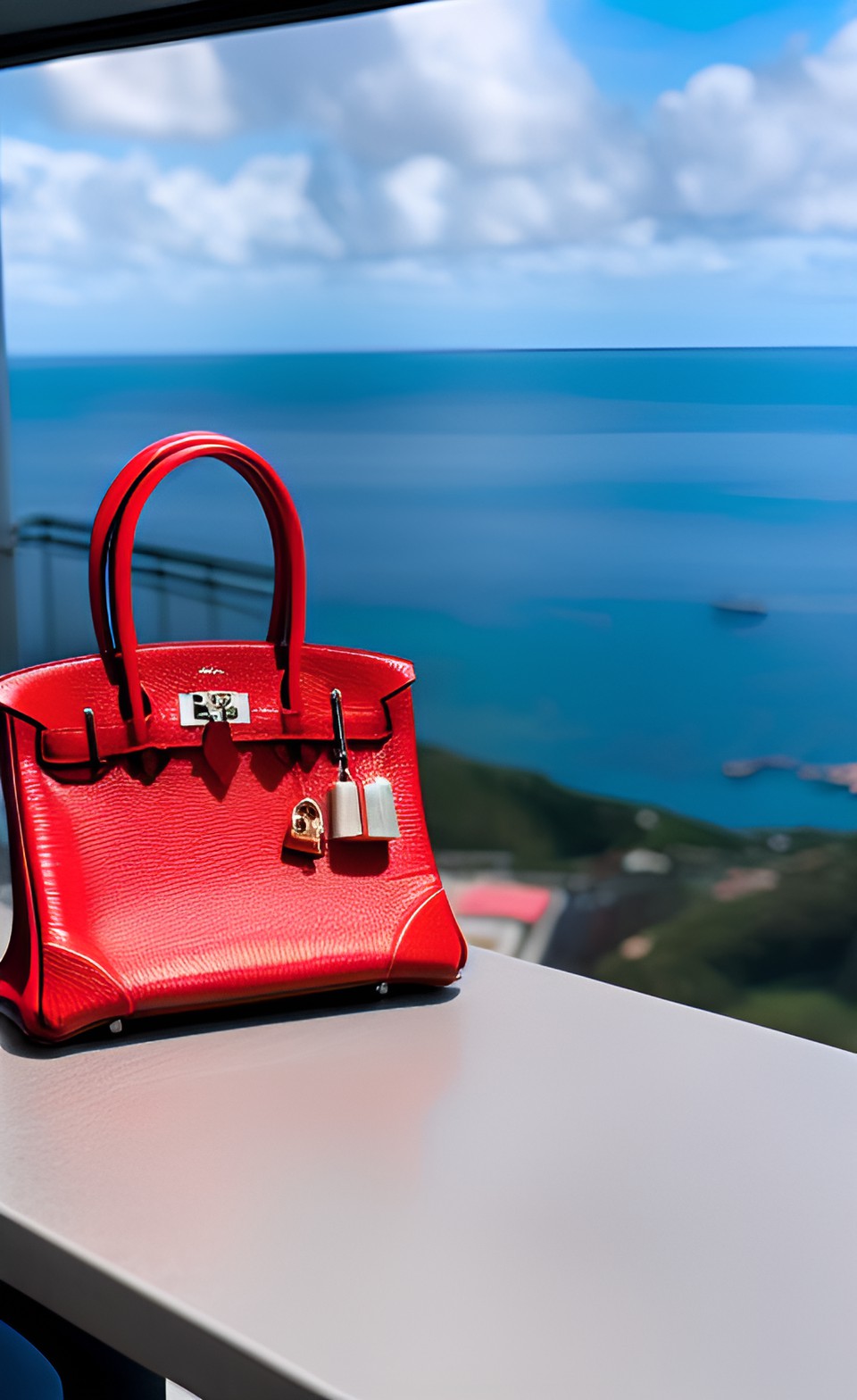
Detective Sarah Jones had seen all kinds of cases in her time, from theft to murder, but this was the first time she had been asked to investigate a missing Birkin bag. The bag in question was a one-of-a-kind Hermès Birkin bag, valued at over $100,000, and had been reported missing by its owner, a wealthy socialite named Amanda Taylor.
Sarah arrived at Amanda’s sprawling mansion on the outskirts of town and was immediately struck by the opulence of the place. The driveway was lined with expensive sports cars, and the front door was made of solid oak. Sarah rang the doorbell, and after a few moments, the butler opened the door.

“Good afternoon, ma’am. I’m Detective Sarah Jones. I’m here to investigate the missing Birkin bag,” Sarah said.
“Ah, yes. Please come in, Detective,” the butler replied, ushering Sarah into the mansion’s grand foyer.
Amanda was waiting for Sarah in the living room, surrounded by a group of equally wealthy and glamorous friends. She was clearly upset, and her eyes were puffy from crying.
“Detective, thank you for coming,” Amanda said, her voice trembling. “My Birkin bag is gone, and I don’t know what to do.”
“Can you tell me what happened?” Sarah asked, taking out her notepad.
“I had a dinner party here last night, and the bag was on the table in the dining room. I went to check on it this morning, and it was gone,” Amanda explained.
“Did anyone else have access to the room?” Sarah asked.
“No, everyone had left by the time I went to bed,” Amanda said.
Sarah looked around the room, taking in the luxurious surroundings. She noticed a few things that caught her attention: a wine stain on the rug, a smudge on the glass coffee table, and a faint smell of cigarette smoke.
“Can I take a look around?” Sarah asked.
“Of course, go ahead,” Amanda said, gesturing towards the dining room.
Sarah made her way to the dining room and immediately noticed something strange. The chairs around the table were pushed back, as if someone had gotten up in a hurry. She also saw a lipstick-stained wine glass on the table, which didn’t match the other glasses. Sarah made a mental note of everything and took a few photos with her phone.
Next, Sarah went outside to search the grounds. She walked around the perimeter of the house, looking for any signs of a break-in. She found nothing, but as she circled back to the front of the house, she noticed something odd. There was a small white car parked across the street, with a man sitting inside, watching the mansion.
Sarah approached the car and knocked on the window. The man rolled it down, revealing a middle-aged man with a greasy comb-over.
“Can I help you?” he asked, clearly annoyed.
“I’m Detective Sarah Jones. I noticed you’ve been parked here for a while. Can I ask why?” Sarah said, showing him her badge.
The man’s eyes widened in surprise, and he stammered, “Uh, I’m a private investigator. I was hired to look into the missing Birkin bag.”
“By who?” Sarah asked, suspicious.
The man hesitated for a moment before saying, “I can’t say. It’s confidential.”
Sarah took down his information and sent him on his way, feeling even more certain that something wasn’t right.
Back inside the mansion, Sarah gathered everyone together in the living room.
“I’ve noticed a few things that are a bit suspicious,” she said. “There’s a wine stain on the rug, a smudge on the coffee table, and a faint smell of cigarette smoke in the dining room. Additionally, I noticed that one of the wine glasses on the table had lipstick on it, which doesn’t match the other glasses. And outside, I saw a private investigator parked across the street, watching the house.”
Amanda and her friends looked at each other nervously, clearly feeling guilty.
“Who had access to the dining room after everyone left?” Sarah asked.
Amanda hesitated for a moment before admitting, “My maid, Maria, stayed behind to clean up. But she wouldn’t steal from me.”
Sarah decided to bring in Maria for questioning. Maria was a young woman from Mexico, and she looked terrified when Sarah asked her about the missing Birkin bag.
“I didn’t take it, I swear!” Maria said, tears streaming down her face.
Sarah decided to take a closer look at Maria’s background and discovered that she had recently fallen on hard times, owing a lot of money to a local loan shark. She also found out that the private investigator was hired by Amanda’s husband, who suspected that Amanda was having an affair.
Putting all the pieces together, Sarah realized what had happened. Amanda had been having an affair with the loan shark and had given him the Birkin bag as a gift. The private investigator had been hired by Amanda’s husband to catch her in the act. Maria had accidentally stumbled upon the bag while cleaning up, and the loan shark had threatened her into silence.
Sarah presented her findings to Amanda, who broke down in tears, admitting to everything. She promised to return the Birkin bag and to come clean to her husband.
In the end, Sarah was able to solve the case and recover the missing Birkin bag. It was just another day on the job for Detective Sarah Jones, but she couldn’t help but feel a bit sorry for the high society types who seemed to have everything except for honesty and integrity.